

But normally it is seen between 30 to 90 days after the invoice is issued. When a company is expected to get the amount within a year or an operating cycle, it is treated as a current asset. Notes receivable accounting is an elaborate process with https://www.instagram.com/bookstime_inc different parties and terminologies involved. To help you gain a better understanding, let’s discuss in detail what notes receivable are and how they work in business transactions.
Are the Accounts Receivable Current or Non-assets?

Possibility 1 – The customer finally pays on 4/30, two months after the original due date. The company charges a 10% penalty on the outstanding balance, which is $17 (1,020 x 10% x 60/360). In a world where a lot of business growth and daily sales are driven by providing credit, it is important to understand the importance of notes receivable accounting and its intricate details. At the maturity date of a note, the maker is responsible for the principal plus interest. The payee should record the interest earned and remove the note from its Notes Receivable account.
How to Manage Accounts Receivable for Services Industry Company?
The maker is another business or debtor who signs a legal agreement to repay the debt, including interest charges. For the past 52 years, Harold Averkamp (CPA, MBA) hasworked as an accounting supervisor, manager, consultant, university instructor, and innovator in teaching accounting online. For the past 52 years, Harold Averkamp (CPA, MBA) has worked as an accounting supervisor, manager, consultant, university instructor, and innovator in teaching accounting online. At the end of the three months, the note, with interest, is completely paid off. The person or company obtaining rights to possess and use the property is the lessee. The accounting https://www.bookstime.com/ for a lease depends on whether it is a capital lease or an operating lease.
- If the terms of the notes receivables were for 15,000 due in 3 months at 8% simple interest, then the calculation of total interest due at the end of the 3 months is as follows.
- Thus, the figure reported in the asset section of the balance sheet is lower than the total amount of receivables held by the company.
- The following journal entries occur at the note’s established start date.
- If it is still unable to collect, the company may consider selling the receivable to a collection agency.
- Possibility 2 – The company realizes the customer will NEVER be able to pay and writes him off.
- Company A sells machinery to Company B for $300,000, with payment due within 30 days.
Accounting Ratios
- If a note is impaired, the loss is measured as the difference between the carrying amount of the note and the present value of expected future cash flows, discounted at the note’s original effective interest rate.
- 1As indicated previously, other versions of generally accepted accounting principles do exist.
- On the other hand, businesses typically incur notes payable when borrowing money, issuing bonds, or entering into agreements where they owe payments to external parties.
- Here, the normal reporting of accounts receivable introduces the problem of preparing statements where the ultimate outcome is literally unknown.
- The placement of notes receivable on the balance sheet provides insight into the timing of future cash inflows, which is valuable information for investors and creditors.
- If a customer approaches a lender, requesting $2,000, this amount is the principal.
Notes receivables are the written promises that state the date when the amount will be paid to the creditors (Companies who sell goods on credit) by the debtor (Customers who purchase goods on credit). The payee is typically a business or creditor expecting payment on a specific date. Notice that the sign for the $7,835 PV is preceded by the +/- symbol, meaning that the PV amount is to have the opposite symbol to the $10,000 FV amount, shown as a positive value. This is because the FV is the cash received at maturity or cash inflow (positive value), while the PV is the cash lent or a cash outflow (opposite or negative value). Many business calculators require the use of a +/- sign for one value and no sign (or a positive value) for the other to calculate imputed interest rates correctly.
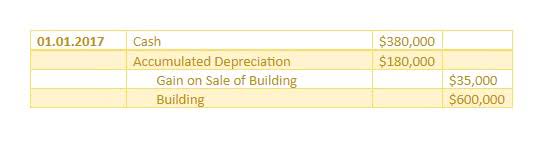
- Interest Income or Interest Revenue is an Revenue account so it has a normal credit balance.
- They give businesses the advantage of formalizing credit terms, mitigating the chances of a payment dispute.
- With a promissory note, the third party who issued the note (called the maker) promises in writing, to pay an amount of money (principal and interest) to the business (called the payee) at a given time or on demand.
- The payee is the creditor who will receive the money while the maker is the debtor who will send the money to the payee according to terms of the note.
- Additionally, a note receivable often includes a predetermined interest rate.
- The person or company obtaining rights to possess and use the property is the lessee.
Among these, one customer with a $5,000 wants to convert the balance to a note receivable. A note receivable will mention the two parties involved, the payee and the payer. The payee is the party that provides the loan, also known are notes receivable a current asset as the borrower.
Responses