


The term is sometimes used alongside “operating cost” or “operating expense” (OPEX). An accounting cycle is an eight-step system accountants use to track transactions during a particular period. Small business owners and individual taxpayers can also benefit from a strong working knowledge of basic accounting concepts and terms. Accounting advances financial literacy and yields precise, powerful insights into financial health. Accounting involves recording, classifying, organizing, and documenting financial transactions and data for internal tracking and reporting purposes. Businesses of all sizes use accounting to remain legally compliant and measure and assess their financial health.
- On this basis, Partner A’s capital account is credited for $6,000 and Partner B’s is credited for $4,000.
- This compensation does not influence our school rankings, resource guides, or other editorially-independent information published on this site.
- When a new partner is admitted to the partnership, the new partner effectively buys the assets of the old partnership from the old partners.
- The excess of the amount withdrawn over retiring partner’s equity in the partnership is divided between the remaining partners on the basis stated in the partnership agreement.
Interest on Drawings
If a retiring partner withdraws cash or other assets equal to the credit balance of his capital account, the transaction will have no effect on the capital of the remaining partners. The term also appears in a type of business structure known as a limited liability company (LLC). LLC structures allow business owners to separate their personal finances from the company’s finances. Owners of LLCs cannot be held personally liable for debts incurred solely by the company. From legal point of view a partnership firm has no separate legal entity apart from the partners constituting it but from accounting point of view, Partnership is a separate business entity. Under section 2(3) of the Income-tax Act, 1961 a partnership firm is a Separate person.
Allocation of Profit or Loss
Closing process at the end of the accounting period includes closing of all temporary accounts by making the following entries. At the end of the accounting period the drawing account is closed to the capital account of the partner. The capital account will be reduced by the amount of drawing made by the partner during the accounting period. The mere right to share in earnings and profits is not a capital interest in the partnership. This determination generally is made at the time of receipt of the partnership interest. The company also offers customized structures designed for the unique needs of pensions, endowments, foundations, and other large institutions.
What Is a Limited Partnership vs. a Limited Liability Partnership?
Integrity Network members typically work full time in their industry profession and review content for Accounting.com as a side project. All Integrity Network members are paid members of the Red Ventures Education Integrity Network. Accounting.com is committed to delivering content that is objective and actionable. To that end, we have built a network of industry professionals across higher education to review our content and ensure we are providing the most helpful information to our readers. My Accounting Course is a world-class educational resource developed by experts to simplify accounting, finance, & investment analysis topics, so students and professionals can learn and propel their careers. Accounting Treatment Salary or commission to a partner being an appropriation of profit so transferred to the debit side of the Profit and Loss Appropriation account and not in Profit and Loss Account.

It’s our responsibility to guide our companies through these changes, ensuring we continue to meet the evolving needs of both our clients and our professionals. As for requiring top management to have an audit background, while representation from assurance practices is important, artificially limiting the talent pool for leadership positions could be counterproductive. In my experience, diverse perspectives in leadership often lead to better performance and, consequently, higher quality services. This need for adaptation is evident even to those of us who entered the professional services world from nontraditional paths.

2 Describe How a Partnership Is Created, Including the Associated Journal Entries
- Partner A and Partner B may both agree to sell 50% of their equity to Partner C. In that case, Partner A will have 30% interest, Partner B will have 20%, and Partner C will own (30% + 20%) 50% interest in the partnership.
- If non-cash assets are sold for less than their book value, a loss on the sale is recognized.
- For example, an LLP must regularly file information reports to local authorities responsible for businesses in the area.
- Depending on what the question is testing, it will either provide the amounts of interest on capital and drawings or give details of how to calculate the amounts.
- Presented in alphabetical order, this glossary of accounting terms covers essential basics and key concepts.
There is no federal statute defining partnerships, but the Internal Revenue Code (Chapter 1, Subchapter K) includes detailed rules on their federal tax treatment. Arthur Andersen was one of the “Big 5” accounting firms until it was implicated in the Enron scandal. Read this CNN Money article about the Arthur Andersen case to see how courts can hold partners liable.

Do Partnerships Pay Taxes?
- A joint venture is where two parties (typically corporations) carry on a business together, though not necessarily for profit.
- Gross profit simply describes the total value of sales in a given accounting period without adjusting for their costs.
- Accountants use “initial inventory plus purchases, minus ending inventory” as a basic accounting formula for calculating COGS over a specific accounting period.
- When discussing partnerships as a form of business ownership, the term person can refer to individuals, corporations, or even other partnerships.
- Despite the use of size descriptors in the title, qualifying as a small- or medium-sized entity has nothing to do with size.
- We can say that it is to be allowed only there are profit in the business.
The transfer of interest may be more attractive to the remaining partners instead of dissolving the business altogether. Partners may contribute capital, labor, skills, and experience to the business. They may have unlimited legal liability for the actions of the partnership and its partners.
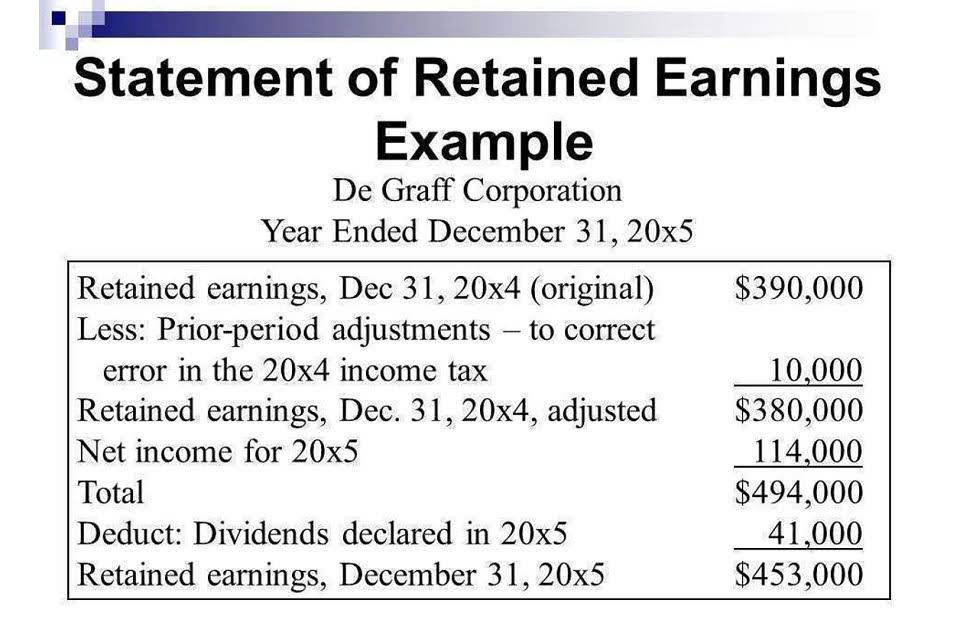
When discussing partnerships as a form of business ownership, the term person can refer to individuals, corporations, or even other partnerships. Statement of partners’ equity starts with capital balances at the beginning of the accounting period, and reflects additional investments, what is partnership accounting made by the partners during the year, net income for the period, and withdrawals. Introductions to basic accounting often identify assets, liabilities, and capital as the field’s three fundamental concepts. Assets describe an individual or company’s holdings of financial value.
- This helps in managing the transition smoothly and in maintaining the partnership’s stability.
- The book value of a partner’s interest is shown by the credit balance of the partner’s capital account.
- To summarize, there does not exist any standard way to admit a new partner.
- Net Income of the partnership is calculated by subtracting total expenses from total revenues.
- The structure can attract prospective partners who do not have prior experience working together.
This document typically outlines the specific percentages or ratios by which profits and losses are to be divided among the partners. In practice, however, it is convenient to separate the amount invested by the partner (the capital account) from the amount they have earned through the trading activities of the partnership (the current account). Therefore, the capital account is usually fixed, while the current account is the current total of appropriations and the share of residual profit or loss, less drawings.
Responses